Research Focus
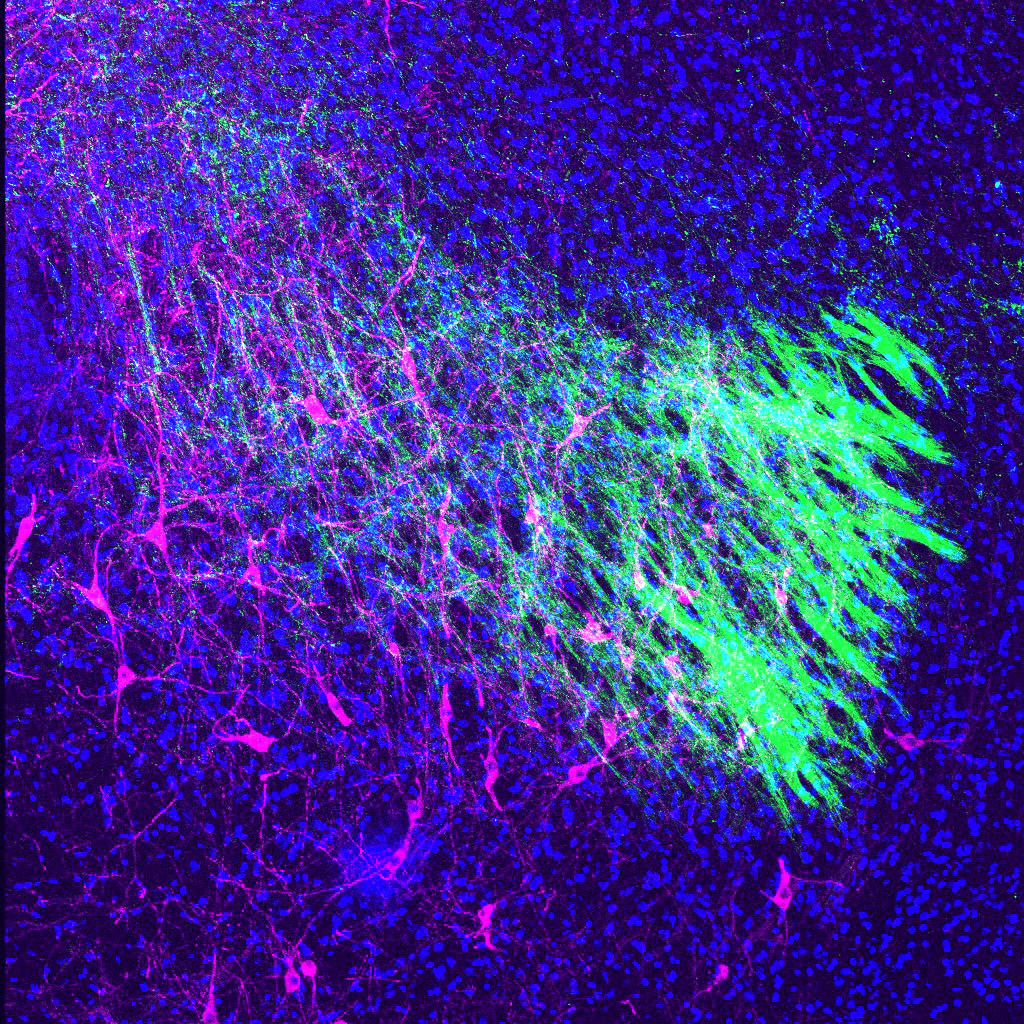
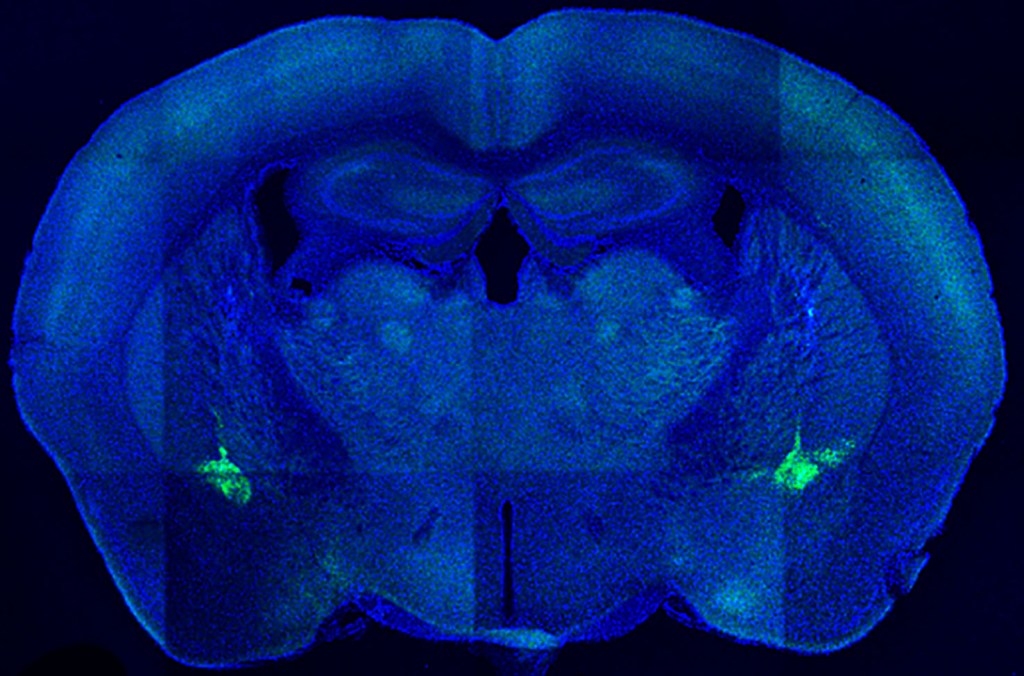
Viral vector assisted tracings
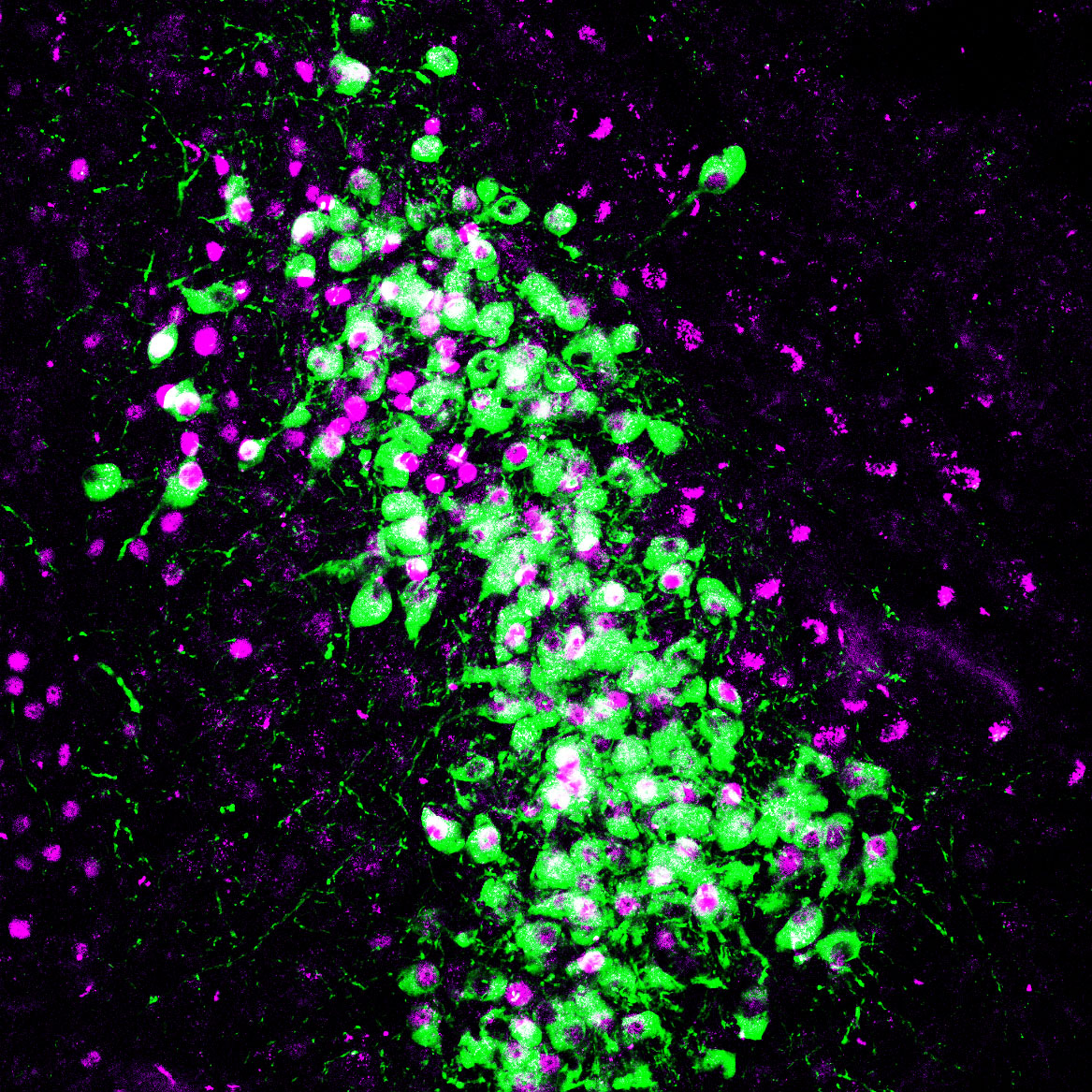
cFOS expressing LC neurons

Midbrain dopamine neurons
1. Neurobiology of defensive scalability
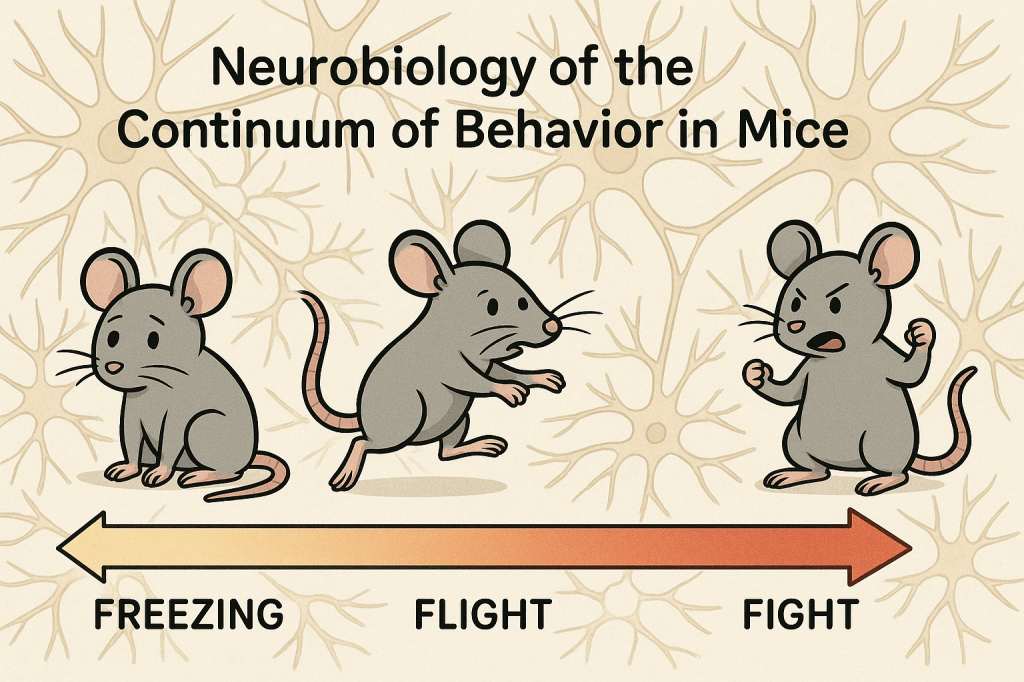
Animals transition through defensive states — from freezing to flight to fight (aggression) — depending on the intensity and proximity of a perceived threat. However, in some cases, hyperactivity in cortical and subcortical circuits can drive maladaptive dominance of aggressive responses, regardless of actual threat level.
We aim to characterize how defensive responses scale toward aggression within the cortical, amygdala, and hypothalamic pathways, using various mouse models
2. Neural circuits mediating trauma-induced aggression
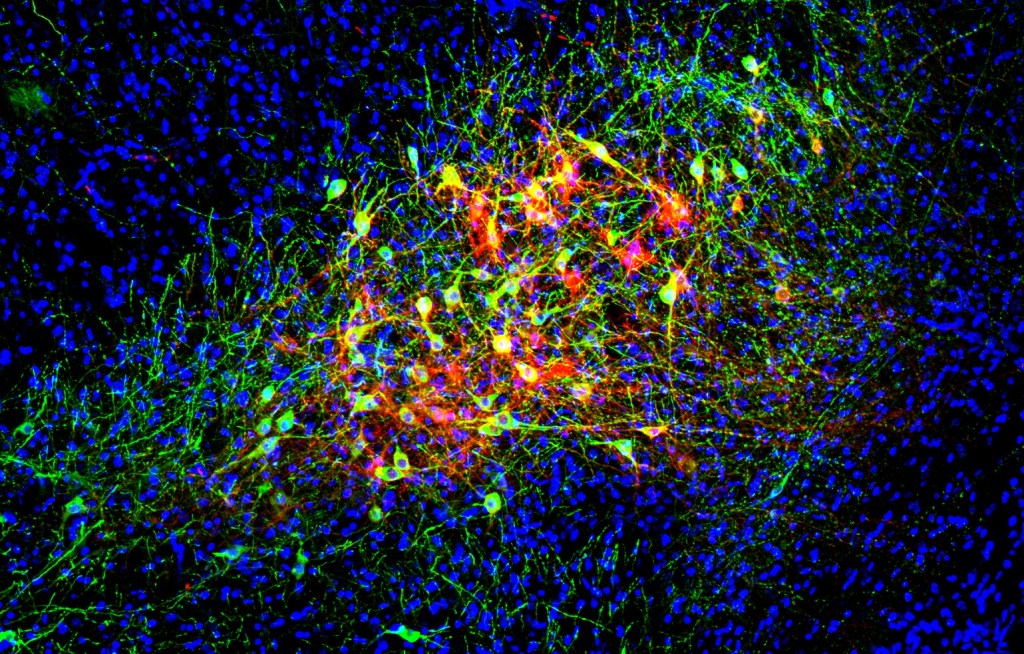
Pathological aggression is a hallmark of conditions like panic disorder and PTSD, often triggered by environmental, traumatic, or interoceptive cues. Despite extensive research, effective, evidence-based treatments for trauma-related aggression pathologies remain limited. Our lab seeks to fill this gap by identifying the neural mechanisms underlying the shift to exaggerated aggressive states following trauma.
3. Neuropeptides in aggression
In addition to studying fear and emotional state transitions, we investigate how neuropeptides modulate aggression-related circuits in the brain. Neuropeptides, such as CRF, vasopressin, and oxytocin, shape the intensity and expression of aggressive behaviors in response to environmental and internal cues. By dissecting the roles of specific neuropeptide systems, we aim to reveal how maladaptive aggression emerges, and to identify potential targets for intervention in aggression-related disorders.
Selected Publications
Borkar CD, Stelly CE, Fu X, Dorofeikova M, Le EQ, Vutukuri R, Vo C, Fadok JP et al. (2024). “Top-Down Control of Flight by a Non-Canonical Cortico-Amygdala Pathway”. Nature. https://doi.org/10.1038/s41586-023-06912-w.
Borkar CD and Fadok JP. (2024). “Distributed Circuits Regulating Defensive State Transitions: Freezing, Flight and Fight”. Neuropsychopharmacology.
Le, EQ, Hereford D, Borkar CD, Aldaco Z, Klar J, Resendez A, and Fadok JP (2024). “Contributions of Associative and Non-Associative Learning to the Dynamics of Defensive Ethograms”. eLife.90414.3.
Dorofeikova M, Borkar CD, Weissmuller K, Smith-Osborne L, Basavanhalli S, Bean E, Smith A, Duong A, Resendez A, Fadok JP. (2023). “Effects of Footshock Stress on Social Behavior and Neuronal Activation in the Medial Prefrontal Cortex and Amygdala of Male and Female Mice”. Plos One 18 (2): 0281388.
Fu, Xin, Teboul E, Weiss GL, Antonoudiou P, Borkar CD, Fadok JP, Maguire J, Tasker JG (2022). “Gq Neuromodulation of BLA Parvalbumin Interneurons Induces Burst Firing and Mediates Fear-Associated Network and Behavioral State Transition in Mice”. Nature Communications 13 (1): 1290.
Borkar, CD, and Fadok JP. (2021). “A Novel Pavlovian Fear Conditioning Paradigm to Study Freezing and Flight Behavior”. JoVE (Journal of Visualized Experiments), no. 167: 61536.
Borkar CD, Dorofeikova M, Le EQ, Vutukuri R, Vo C, Hereford D, Resendez A, Basavanhalli S, Sifnugel N, Fadok JP. (2020). “Sex Differences in Behavioral Responses During a Conditioned Flight Paradigm”. Behavioural Brain Research 389: 112623.
Borkar CD, Sagarkar S, Sakharkar A, Subhedar NK, Kokare DM (2019). Neuropeptide CART prevents memory loss attributed to withdrawal of nicotine following chronic treatment in mice. Addict Biol;24(1):51-64. https://onlinelibrary.wiley.com/doi/abs/10.1111/adb.12579
Borkar CD, Bharne AP, Nagalakshmi B, Sakharkar A, Subhedar NK, Kokare DM (2018). Cocaine- and amphetamine-regulated transcript peptide (CART) alleviates the symptoms of MK-801 induced schizophrenic dementia-like symptoms. Neuroscience;375:94-107. https://www.sciencedirect.com/science/article/abs/pii/S0306452218300861
Borkar CD, Shelkar GP, Upadhya MA, Subhedar NK, Kokare DM (2016). Neuropeptide Y system in accumbens shell mediates ethanol self-administration in posterior ventral tegmental area . Addict Biol;21(4):766-75. https://onlinelibrary.wiley.com/doi/10.1111/adb.12254

 Borkar Lab